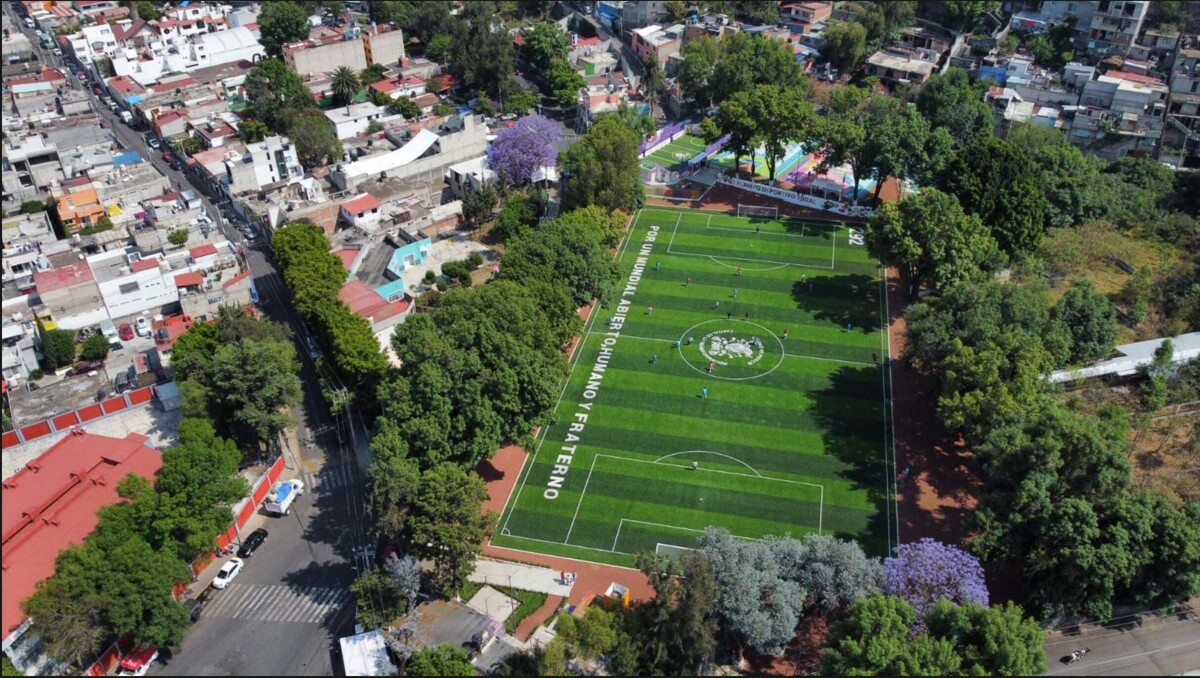
When one stops to think about it, it is an enormous effort that can leave lasting benefits for the city and its inhabitants. In many cities around the world, the relationship between community sports infrastructure and well-being has been studied. In these spaces, there will be activities with PILARES and the community itself. They will be meeting points for families, young people, and the elderly to organize their time around sports, health, and social interaction. In recent days, the delivery of soccer fields began throughout Mexico City. The goal is ambitious: more than 500 new or renovated fields, 317 managed by the City Government and around 200 committed by the boroughs. The mobility and security operation resulted in no incidents outside the stadium, and the organization of the people was noticeable. That is the spirit of events like the World Cup: advancing investments and programs that unite the city around a common goal, in this case, social well-being. This is also how the call from Head of Government Clara Brugada to build a 'World Cup of rights' is understood, where investments translate into concrete benefits for people. The fields are sized for 7-a-side and fast soccer, and thanks to logistical efficiencies, two multi-purpose courts for basketball and other activities were also installed. The most valuable thing is what comes next. A field, in the end, is much more than a field. This week, a special case was seen: the inauguration of the San Lucas Xochimanca sports facility in Xochimilco, led by the Ministry of Tourism. What makes it different is that it is located in an ejido, which implies working with the community, respecting its forms of organization, and building agreements. Everyone helped: neighboring communities, authorities, and the private sector. These spaces usually trigger physical activity, improve mental health, and strengthen social cohesion. We are getting closer and closer to the initial whistle. It is also proven that the way activities are governed and programmed is key for them to actually work. And it is part of the 'Social World Cup' promoted by President Claudia Sheinbaum, with the rehabilitation and construction of sports spaces throughout the country so that the 2026 World Cup leaves a real legacy in every community. Radar. On March 28, 2026, Mexico City demonstrated that it is ready to host the World Cup. It is not just about exercising. This is how it was done.